
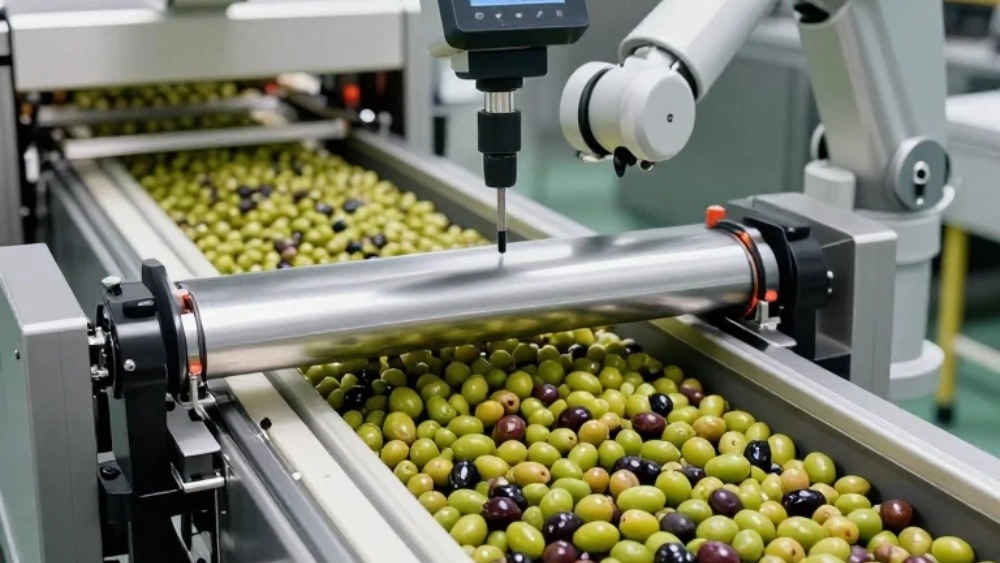
Designing and manufacturing olive grading system with high accuracy and optimal production speed
Designing and manufacturing olive grading system with high accuracy and optimal production speed
Introduction
In the agricultural products processing industry, grading of olives is known as one of the key steps before packaging and marketing. Grading of olives not only has a direct effect on the appearance quality of the product, but also plays an important role in increasing the productivity of production lines, reducing waste and improving consumer satisfaction. Due to the increase in demand for processed olives and intense competition in the domestic and export market, the use of advanced olive grading systems with high accuracy and optimal production speed has become a necessity.
In this article, a comprehensive review of the design and manufacturing principles of olive grading, the technologies used, the accuracy and speed indicators, and the effect of these systems on the optimization of production lines are discussed. Also, the role of industrial companies active in this field will be mentioned, including the collections that are active in the field of industrial machinery design.
The importance of grading olives in the food industry
Olive grading is a process in which fruits are separated based on criteria such as size, weight, color, appearance health and uniformity. This process allows manufacturers to supply a standard and homogeneous product to the market.
In traditional lines, olive grading was often done manually, which resulted in low speed and high labor cost in addition to human error. Today, with the development of mechanical and intelligent technologies, automatic olive grading systems have replaced traditional methods and have been able to create a fundamental transformation in this sector.
The principles of olive grading system design
Designing an efficient olive grading system requires considering a set of technical and operational factors. These factors include the type of olives, production line capacity, environmental conditions, and expected level of automation.
In the design stage, first the physical characteristics of olives such as diameter, length, weight and texture are checked. Then, based on these data, the appropriate mechanism for separation and grading is selected. In modern systems, a combination of precise mechanical equipment and advanced control systems are used to grade olives with the highest accuracy.
Technologies used in olive grading
Various technologies are used in making olive grading machines. One of the most common methods is to use graduated rollers or conveyor belts with adjusted grooves that separate the olives by size.
In more advanced systems, optical sensors and industrial cameras are used to detect olive color and appearance defects. These technologies enable more accurate detection and removal of unsuitable olives. Combining these sensors with image processing software significantly increases the accuracy of olive grading.
High accuracy in grading olives
Accuracy in olive grading is one of the most important indicators of the performance of these systems. High accuracy means correct separation of olives in specific categories without interference and errors. This issue has a direct effect on the final quality of the product and the satisfaction of the target market.
To achieve high accuracy, precise mechanical design, correct adjustment of moving components and use of stable control systems are essential. Also, regular maintenance and periodic calibration of devices play an important role in maintaining the accuracy of olive grading.
Optimum production speed and its role in productivity
Besides accuracy, optimal production speed is another key factor in choosing and making an olive grading system. Low speed can create a production bottleneck and increase costs. On the other hand, increasing the speed too much without paying attention to accuracy can reduce the quality of olive grading.
The integration of the grading system with the production line
One of the advantages of modern olive grading systems is the ability to integrate with other parts of the production line. These systems can be installed directly after washing or before packaging and continue the production flow without interruption.
Proper integration reduces manual handling, increases safety, and improves production line order. It is also possible to collect production data and analyze the performance of the olive grading system, which is very valuable for production management.
The role of industrial design in the construction of grading devices
Industrial design in the manufacture of olive grading machines is not limited only to the beauty of appearance. Ergonomics, easy access for maintenance, and optimal use of space are among the things that are considered in industrial design.
Resistant body, use of suitable material for contact with food and compliance with health standards are requirements for the construction of these devices. Compliance with these principles increases the life of the device and reduces maintenance costs.
The effect of olive grading on the market and export
In competitive markets, the uniformity and appearance quality of the product plays a decisive role in the buyers' decisions. Accurate and standardized olive grading can create significant added value for producers.
In the field of export, compliance with international standards and offering a homogeneous product in terms of size and quality increases the chances of success in foreign markets. For this reason, investing in the construction and use of advanced olive grading systems is considered a strategic decision.
Maintenance and optimization of rating systems
After the construction and installation of the olive grading system, its proper maintenance and continuous optimization is very important. Periodic review of parts, regular cleaning and training of operators are among the measures that help to maintain the optimal performance of the system.
Optimization of functional parameters based on olive type and seasonal conditions can keep the accuracy and speed of olive grading at the desired level and prevent quality loss.
The role of industrial companies in the development of grading technology
The development and construction of olive grading systems requires technical knowledge, industrial experience and accurate understanding of market needs. Companies active in the field of designing and manufacturing industrial machinery can provide solutions that suit the manufacturers' conditions by relying on these factors.
In the meantime, websites like https://adan-sanat.ir as a platform for introducing industrial capabilities and providing technical information in the field of processing machinery, play an important role in providing manufacturers access to new solutions.
summary
Grading olives with high precision and optimal production speed is one of the main pillars of success in the olive processing industry. Principled design, use of appropriate technologies, attention to accuracy and speed, and integration with the production line are among the factors that determine the performance of these systems.
According to the growth of the market and the need for standard products, the use of advanced olive grading systems can create a sustainable competitive advantage for producers and lay the foundation for sustainable development in this industry.